
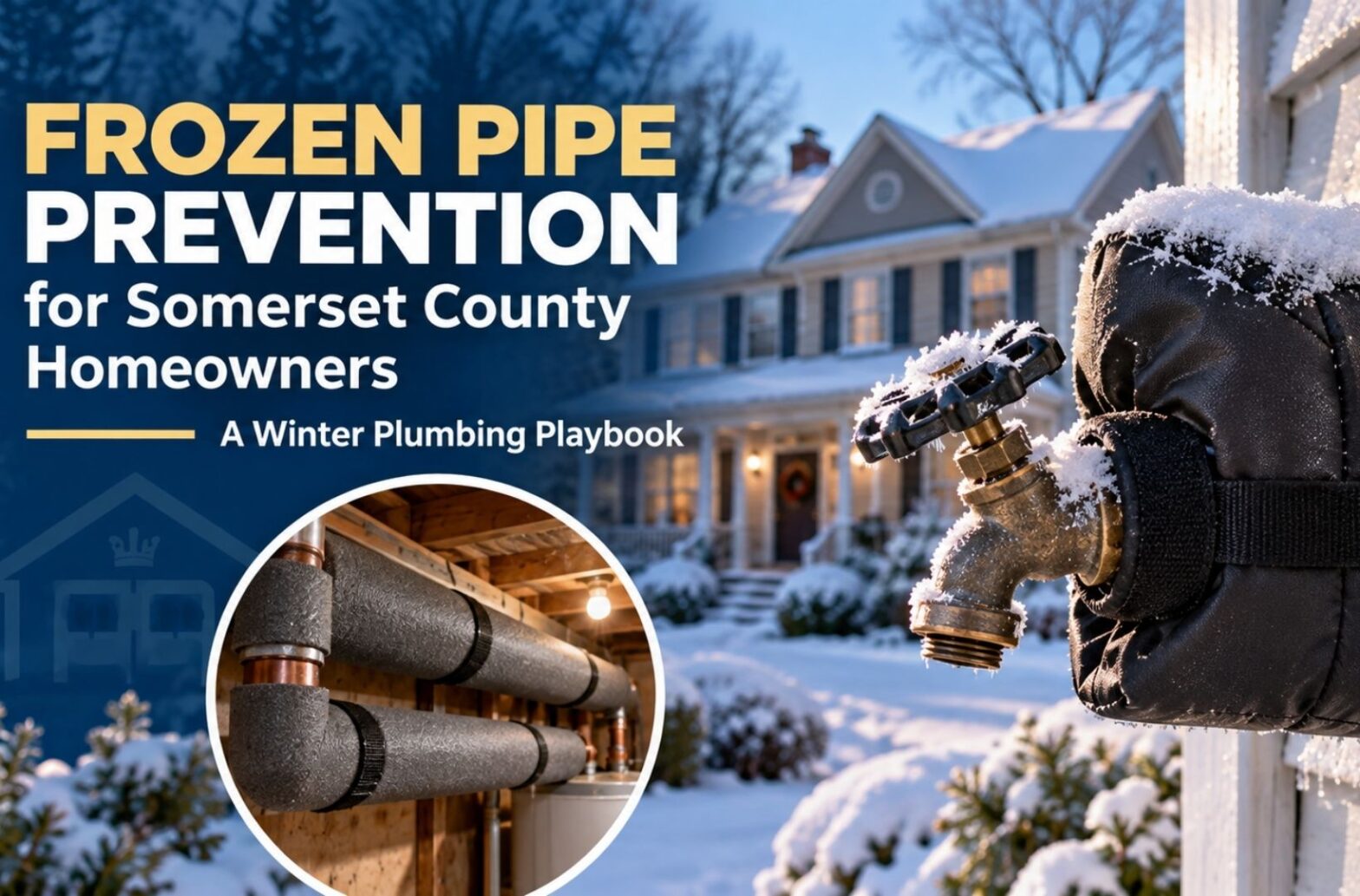
A single burst pipe can flood a home with hundreds of gallons of water in a single day, turning a quiet evening into a costly emergency. Somerset County winters make that risk very real, with January lows regularly dipping into the low 20s°F and 23 to 25 inches of snow falling each year. The good news is that frozen pipe prevention in Somerset County doesn’t have to be complicated, and most disasters are avoidable with a little preparation and the right knowledge.
Queen B Plumbing is proud to serve homeowners across all 21 municipalities in Somerset County, including Bridgewater, Somerville, Watchung, and Millstone. As a woman-owned, local plumbing, heating, and cooling company based in Warren, NJ, we know exactly what these winters can do to a home’s pipes. Keep reading for a full breakdown of prevention steps, emergency protocols, and answers to the questions Somerset homeowners ask most.
Why Pipes Freeze (and Why They Burst)
Water is one of the few substances that expands as it freezes, and that simple fact is what makes winter so hard on plumbing. When water inside a pipe turns to ice, it pushes outward against the pipe walls, building pressure with nowhere to go. For a closer look at how this happens, the American Red Cross offers detailed guidance on frozen pipe prevention that’s worth bookmarking before winter arrives. Understanding this process makes it much easier to see why certain areas of a home are so much more vulnerable than others.
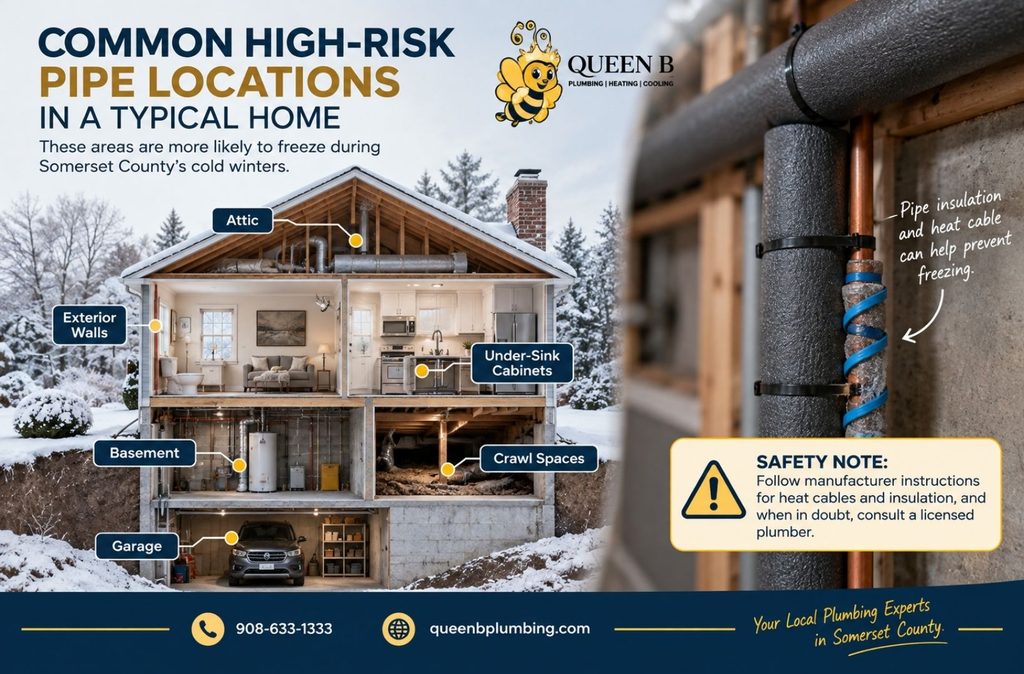
The pipes most at risk are the ones with the least protection from indoor heat. This includes lines running through exterior walls, as well as those in unheated spaces like attics, basements, crawl spaces, and garages. Under-sink cabinets located on exterior walls are another common trouble spot, since they’re often cut off from the home’s warm air circulation.
Somerset County’s climate makes this a genuine seasonal concern rather than a rare fluke. With January lows averaging around 20 to 21°F and consistent annual snowfall, local homes see real stretches of hard freeze most winters. That combination of cold snaps and vulnerable pipe locations is exactly why frozen pipe prevention in Somerset County matters so much for Somerset County homeowners.
Your Frozen Pipe Prevention Checklist for Somerset County
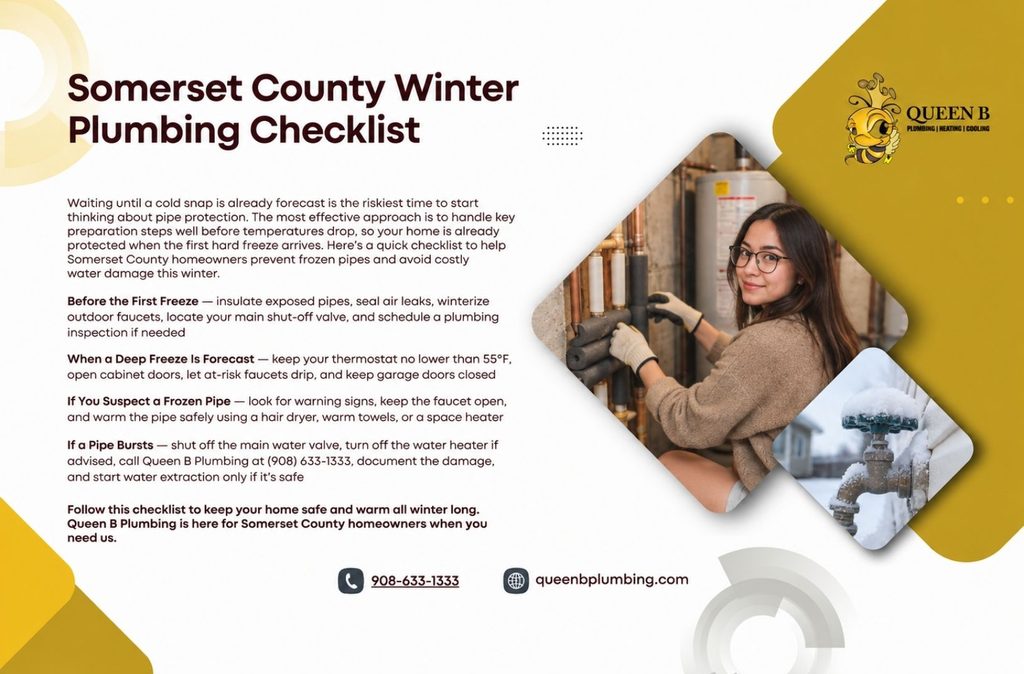
Waiting until a cold snap is already forecast is the riskiest time to start thinking about pipe protection. The most effective approach is to handle key preparation steps well before temperatures drop, so your home is already protected when the first hard freeze arrives. Below is a prioritized checklist broken into four stages: preparation, active freeze warnings, suspected frozen pipes, and what to do if a pipe actually bursts. Tackling these in order gives Somerset homeowners the best shot at avoiding costly water damage this winter.
Before the First Freeze (Preparation)
Getting ahead of winter starts with a few targeted upgrades to the most vulnerable parts of your plumbing system. These steps take relatively little time but make a significant difference once temperatures start falling.
- Insulate exposed pipes in unheated areas using foam sleeves or heat cable where appropriate
- Seal air leaks near pipes, especially around rim joists, foundation cracks, and points where lines enter the house
- Winterize outdoor faucets by disconnecting hoses, shutting off the indoor supply, and draining spigots; frost-proof sillcocks or insulated covers add extra protection
- Locate and label your main water shut-off valve, and make sure everyone in the household knows how to use it
- Schedule a plumbing inspection with Queen B if you’ve dealt with recurring leaks or low water pressure
When a Deep Freeze Is Forecast (Action Steps)
Once a hard freeze is in the forecast, preparation shifts from long-term fixes to short-term action. These steps are meant to keep warm air moving toward vulnerable pipes and reduce the pressure that builds when water sits still in cold lines. None of them take more than a few minutes, but skipping them during a serious cold snap is when problems tend to start.
- Keep your thermostat no lower than 55°F, and avoid big temperature setbacks day to night during cold spells
- Open cabinet doors under sinks located on exterior walls to let warm air reach the pipes inside
- Let faucets connected to at-risk pipes drip in a pencil-thin stream when temperatures drop below roughly 20°F for extended periods, especially overnight
- Keep garage doors closed if any plumbing lines run through the garage
If You Suspect a Frozen Pipe (But No Burst)
Catching a frozen pipe before it bursts can save you from a much bigger headache down the road. A few clear warning signs usually show up first, and knowing how to respond safely in that window makes all the difference. Acting quickly and correctly at this stage often means the difference between a minor inconvenience and a major repair.
Common signs of a frozen pipe include little to no water coming from a faucet, visible frost on an exposed pipe, or a noticeable bulge along its length. If you spot any of these, keep the faucet open and gently warm the pipe starting near the faucet end, using a hair dryer, warm towels, or a space heater kept at a safe distance. Avoid open flames or other high-heat tools, since these can damage the pipe or create a fire hazard, and never ignore a persistent lack of water flow.
For more on handling plumbing emergencies calmly, check out our guide on what to do before help arrives. Queen B Plumbing is ready to help Somerset homeowners handle frozen pipes safely before they turn into a bigger problem.
If a Pipe Bursts (Emergency Protocol)
A burst pipe is one of the few plumbing situations where every minute truly counts. Water can flood a home at a rate of hundreds of gallons per day, causing damage to floors, walls, and belongings almost immediately. This kind of quick response is echoed in State Farm’s winter home preparation guidance, which emphasizes shutting off water at the source as the single most important first step. Here’s exactly what to do the moment you discover a burst pipe in your home.
- Shut off the main water valve immediately to stop the flow at its source
- Turn off the water heater if instructed by a professional, and stay clear of any electrical hazards near standing water
- Call Queen B Plumbing at (908) 633-1333 for 24/7 emergency response anywhere in Somerset County
- Document the damage with photos for insurance purposes, and begin water extraction only if it’s safe to do so
High-Risk Areas in Typical Somerset Homes

Not every pipe in your house faces the same level of risk when temperatures drop. Certain spots are far more prone to freezing simply because of how they’re built and where they sit within the home. Knowing which areas deserve extra attention makes it much easier to focus your prevention efforts where they matter most. Here are the spots Somerset homeowners should keep a close eye on each winter.
- Basements and crawl spaces, which tend to be unheated and drafty
- Attics with water lines running through them, along with garage plumbing runs
- Kitchen and bathroom cabinets built along exterior walls
- Outdoor hose bibs and irrigation lines exposed directly to the cold
DIY vs. Pro: When to Call a Somerset Plumber
Plenty of frozen pipe prevention can be handled on your own with basic tools and a little time. But there’s a clear line between routine maintenance and situations that call for a licensed plumber, and knowing where that line sits can save you from making a problem worse. Somerset homeowners are often comfortable tackling the smaller tasks, while bigger warning signs are best left to a professional. Here’s how to tell the difference.
Tasks that are generally safe to handle yourself include insulating pipes, sealing drafts around your home, winterizing outdoor faucets, and using the drip strategy during a hard freeze. These are low-risk, preventive steps that don’t require specialized tools or training. On the other hand, it’s time to call a professional if you’re dealing with recurring freezes, no water flow after attempting to thaw a pipe, or visible bulges and leaks. Water stains or sagging ceilings, along with any suspected hidden leaks, are also signs that call for expert help right away.
Queen B Plumbing offers the local responsiveness and full-service plumbing expertise Somerset homeowners need, from leak repair to water heaters, sump pumps, and drain cleaning. When a situation goes beyond basic prevention, our team is ready to step in quickly.
Cost of Waiting: Why Prevention Pays Off
It’s easy to put off winter plumbing prep when everything seems fine, but that’s exactly the kind of thinking that leads to expensive surprises. A single burst pipe can release hundreds of gallons of water into a home in just one day, and the resulting repairs often run into the thousands of dollars. If your home’s pipes are aging or have needed frequent repairs, it may be worth reading our guide on when to replace plumbing pipes in Somerset County before winter sets in.
= Weighing that potential cost against the relatively small investment of prevention makes the choice clear.
Scheduling a plumbing inspection or handling basic maintenance before winter hits is a fraction of the cost of emergency repairs and water damage restoration. Queen B Plumbing helps Somerset homeowners catch small issues before they become big ones, protecting both their homes and their budgets.
Don’t Let This Winter Catch You Off Guard
Somerset County winters don’t give much warning before temperatures drop low enough to put your pipes at risk. A single frozen pipe can turn into a burst line in hours, and a burst line can mean thousands of dollars in water damage before you even realize what’s happening. The good news is that a little preparation now can save you from that stress entirely, and you don’t have to figure it out alone.
Queen B Plumbing has helped homeowners across all 21 Somerset County municipalities get ready for winter, from simple pipe insulation to full emergency response when things go wrong. As a woman-owned, locally based team, we understand exactly what this climate does to home plumbing systems, and we’re proud to be the trusted name Somerset homeowners call on. Whether you need a quick winter plumbing check or you’re dealing with a burst pipe right now, our team is ready to help, day or night.
📞 Call Queen B Plumbing at (908) 633-1333 to schedule your winter plumbing inspection, or reach us anytime for 24/7 emergency service. Don’t wait for the first hard freeze to find out your pipes weren’t ready. Protect your home, your family, and your budget with a plumbing team that knows Somerset County winters inside and out.
Media Recommendations
- Hero image: a winterized exterior faucet or insulated pipes in a basement
- Inline visuals: a diagram of high-risk pipe locations in a typical home, plus a photo of foam pipe insulation or heat cable with a safety note
- Optional: a short downloadable checklist graphic as a lead magnet


1 comment