No hot water in the middle of a New Jersey week is annoying. No hot water because your water heater pilot light keeps going out and won’t stay lit, which is worse, because it usually keeps happening at the worst times (cold mornings, laundry days, right before work).
This guide is written for NJ homeowners in Warren, Hunterdon, Somerset, Morris, and Middlesex County who want a clear, safe troubleshooting path that’s not overly technical.
If you’d rather have a technician diagnose it quickly, our water heater repair services can handle water heater pilot light keeps going out issues across Somerset County and nearby NJ towns
Quick Safety Check (Don’t Skip This)
If your water heater is gas, you’re dealing with fuel + flame. That’s not meant to scare you, it’s meant to keep you from making the one mistake that turns a small issue into a dangerous one.
If you smell gas, do not try to relight the pilot. Leave the area, avoid switches/flames, and contact your gas utility or emergency services. Many manufacturer guides and troubleshooting docs lead with this same caution. For a manufacturer reference, A. O. Smith’s pilot light relighting instructions walk through the OFF/wait step and safe relighting basics.
Also, If your water heater is in a tight basement closet (common in NJ), make sure the area isn’t packed with boxes, paint cans, or anything that blocks airflow. Poor combustion air is a real, common cause of pilot problems. “If your heater sits in a tight NJ basement utility area and this keeps happening, our heating services team can check combustion air, drafts, and venting during a service visit
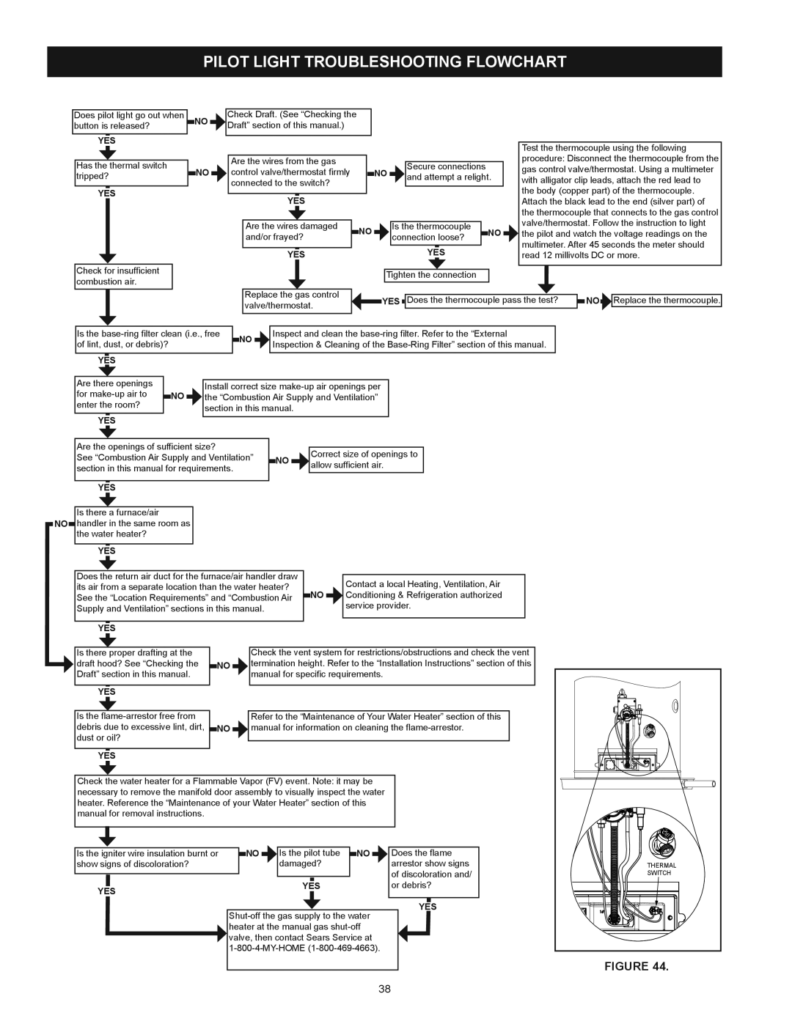
Before you relight anything, use the flowchart below to narrow down the most likely cause. In New Jersey basements, drafts and airflow issues are common, so this helps you avoid repeating the same relight attempt over and over
Step-by-Step: How to Relight The Water Heater Pilot Light Keeps Going Out Safely (Most Models)
Before you start, understand this: your exact steps are printed on your unit. Use the label on the tank as the “final boss.”
Most manufacturers also advise turning the control to OFF and waiting before relighting to let any residual gas clear.
Step 1 — Confirm the basics
- Confirm it’s a gas water heater and it actually has a pilot (some units are electronic ignition).
- Find the lighting instructions label (usually on the front).
Step 2 — Turn the knob to OFF
- Turn the gas control to OFF.
- Wait 5–10 minutes (follow your label; waiting is a safety step).
Step 3 — Set to PILOT and hold
- Turn the knob to PILOT.
- Press/hold the knob down (this feeds gas to the pilot).
Step 4 — Ignite
- Use the built-in igniter button (if you have one), or a long lighter if your igniter is broken.
- Keep holding the knob down so the thermocouple/thermopile can heat up.
Step 5 — Keep holding (important)
- Hold for 30–90 seconds (some systems take longer, especially after gas has been off or air is in the line).
Step 6 — Release and verify
- Release the knob slowly.
- Look through the viewing window: the pilot flame should stay lit.
Step 7 — Turn to ON
- Turn the control to ON and set your temperature.
If It Lights But Won’t Stay Lit: 11 Common Causes (And What To Do)
A pilot that won’t stay lit is usually the heater protecting you by shutting gas off when something isn’t right, such as airflow, flame sensing, gas supply, or a failing control. Manufacturer troubleshooting and homeowner resources consistently point to the same core categories: thermocouple/thermopile problems, drafts/airflow, gas pressure/supply, dirty components, and control valve issues.
These root causes also show up in manufacturer service manuals; for example, Bradford White includes a pilot troubleshooting table that lists thermocouple connection, pilot flame contact, and venting/draft issues as common culprits.
1. Spark Igniter Is Malfunctioning (pilot won’t light easily)
If the igniter button clicks but won’t spark (or it sparks weakly), you may not be lighting the pilot consistently.
What you can do: Use a long lighter following the label instructions. If it lights with a lighter but not the igniter, the igniter may be failing.
Call a pro if: You can’t light it safely or you suspect gas is pooling.
2. Dirty Pilot Tube / Clogged Pilot Orifice (weak pilot flame)
A weak pilot flame won’t reliably heat the thermocouple/thermopile, so the gas valve shuts off.
What you can do: You can visually check if the flame looks small, lazy, or uneven through the viewport.
Call a pro if: Cleaning requires disassembly (often does) or the unit is sealed/FVIR style.
3. Dirty Thermocouple (standing pilot systems)
Think of the thermocouple as a safety sensor: if it doesn’t “feel” heat, it shuts the gas off.
What you can do: If the pilot goes out the moment you release the knob, this is a prime suspect.
Likely fix: Cleaning or replacing the thermocouple/thermopile is common.
4. Kinked Thermocouple Or Damaged Sensor Line
If the sensor line is bent/kinked, it can fail to read properly.
What you can do: Only a quick visual check if accessible.
Call a pro: This is usually a replace-and-test job.
5. Broken Thermocouple / Failing Thermopile
If your pilot lights but won’t stay lit even after holding the knob long enough, a failing sensor is very common.
What you can do: Retry the lighting process once, holding longer (up to ~90 seconds).
Call a pro if: It still drops out—don’t keep repeating relight cycles all day.
6. Faulty Main Control Valve (gas control valve/thermostat)
When the control valve starts failing, you can get “random” pilot outages, or the pilot won’t hold consistently.
What you can do: Not much safely, this is not a DIY swap for most homeowners.
What a pro checks: Valve operation, safety circuits, and whether replacement is required.
7. Flex Tube Problems (kinks, restrictions, bad connection)
If the gas flex line is kinked or restricted, the pilot may starve for fuel.
What you can do: Do not adjust gas piping yourself. You can check that the manual shutoff handle is fully open (parallel to the pipe).
Call a pro: Any suspected gas supply restriction.
8. Faulty Electrical Wiring (for power-vented or electronically controlled units)
Some gas water heaters plug into an outlet or have powered dampers/safety circuits. Loose wiring or failed components can shut the system down.
What you can do: If it’s plugged in, confirm the outlet has power and the plug is secure.
Call a pro: If diagnostics/lights indicate a fault or you see damaged wiring.
9. Bad Solenoid / Safety Circuit Fault (internal to gas valve)
Homeowners will sometimes hear “clicking” or see inconsistent operation tied to valve internals.
What you can do: This is a pro-level diagnostic item.
Why it matters: Safety components are designed to shut gas off when anything is questionable.
10. Gas Flow Problems (supply, pressure dips, utility-side issues)
Gas pressure changes can snuff a pilot or prevent it from staying stable, especially if other gas appliances are running.)
What you can do: Note whether it happens when the furnace, stove, or dryer turns on.
Call a pro: If it’s recurring, gas pressure/supply needs proper testing.
11. Drafts, Blocked Combustion Air, Or Venting Issues (very common in NJ basements)
“And if your home also runs a boiler, the same draft/venting problems can show up there too, here’s our boiler services page for NJ homeowners
Cold drafts and poor combustion air are repeatedly listed as causes in manufacturer troubleshooting.
In New Jersey, this shows up a lot when:
- The heater is near an exterior door that opens often (garage/basement walkout)
- A dryer or bath fan is pulling air and creating negative pressure
- The utility room is tight and packed with stored items
- Lint/dust buildup restricts airflow (especially around FVIR/flame arrestor designs)
What you can do: Make sure the area around the heater is clear and not starved for air.
Call a pro: If you suspect venting issues, backdrafting, or repeated shutdowns.
When to Stop DIY and Call a Pro (NJ Reality Check)
Relighting the pilot once is fine. Relighting it every day is your water heater telling you something is failing, and it’s usually a safety component doing its job.
Manufacturers also note that under normal conditions you shouldn’t be repeatedly relighting a pilot; nuisance outages are a sign to bring in a professional.
Call for service now if:
- You smell gas or suspect a gas leak
- The pilot won’t stay lit after 1–2 proper attempts
- The flame looks weak/yellow or “lazy”
- The unit is throwing status/light codes (common on newer systems)
- You suspect venting/backdrafting or combustion air issues
If you’re in Warren, Hunterdon, Somerset, Morris, or Middlesex County, this is exactly the kind of problem a local tech can diagnose quickly, because the fix often depends on the home setup (basement airflow, vent path, lint, drafts), not just the water heater itself.
To schedule service or ask a quick question before you relight it again, use our Contact Us page.
Prevent It From Happening Again (Simple Wins)
Most “pilot keeps going out” calls we see come down to airflow, dirt/lint, or a sensor that’s simply worn out.
A few prevention steps that match both homeowner guidance and manufacturer troubleshooting themes:
- Keep the area around the heater clear (don’t block combustion air).
- If your unit has an air intake/flame-arrestor area that collects lint (common near laundry), keep the space clean.
- If your water heater has a status light, pay attention to blink codes, those codes are meant to narrow the cause fast.
- Schedule a quick annual check before winter (NJ basements + cold drafts = pilot problems).
FAQs
Why does my pilot light go out when I release the knob?
Usually because the thermocouple/thermopile didn’t heat up enough (hold longer) or it’s dirty/failing. (hotwater.com)
Is it normal to relight my pilot often?
No, under normal operation, you shouldn’t be relighting it repeatedly. If it keeps happening, it’s time for service.
Can drafts really blow out a pilot light?
Yes. Drafts and insufficient combustion air are commonly listed causes in manufacturer troubleshooting and homeowner resources.
Could my gas utility be the problem?
Sometimes. Gas pressure/supply issues can cause outages, especially if multiple gas appliances run at once.


