
A tub-to-shower conversion in New Jersey tends to make the most sense when the tub sits unused, the bathroom feels cramped, or accessibility has become a daily concern That said, it is not the right call for every home. If your bathroom is the only one with a tub, or you are planning to sell to a family buyer down the road, keeping the tub may serve you better. The right answer depends on how your household actually uses the space, and what you want your bathroom to do for you long term.
At Queen B Plumbing, a woman-owned business with over 40 years of experience serving New Jersey homeowners, we help clients weigh these tradeoffs before any work begins, so the final decision fits the home and the family living in it.
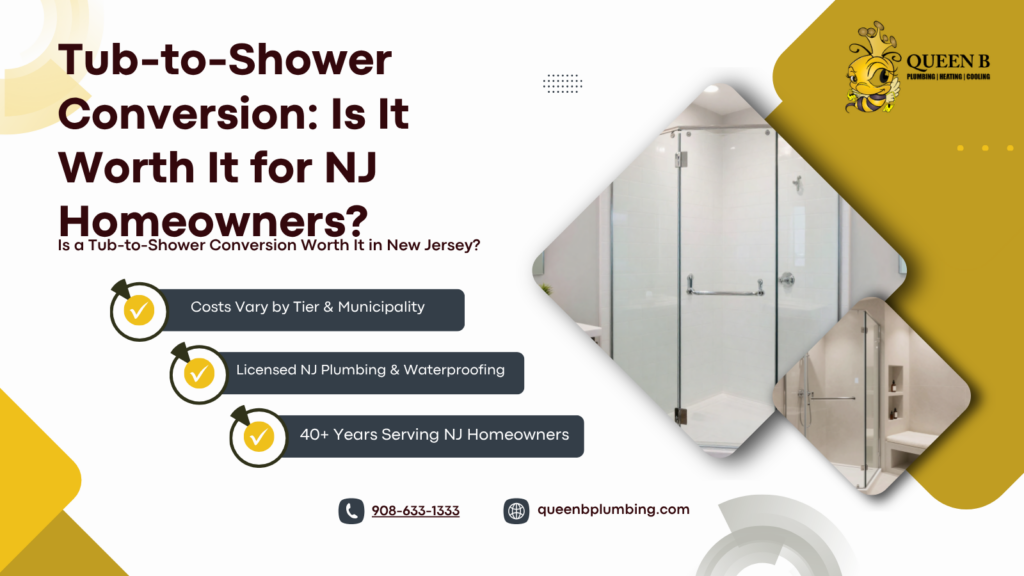
What a Tub-to-Shower Conversion Changes
A tub-to-shower conversion in New Jersey involves more than swapping one fixture for another. It is a genuine bathroom remodel, and understanding what is involved helps set realistic expectations for cost, timeline, and disruption.
The process typically includes:
- Demolition: Removing the existing tub, surrounding tile or surround panels, and any damaged subflooring underneath.
- Plumbing adjustments: Relocating or modifying supply lines and drain connections to suit the new shower layout, which is why licensed plumbing work matters here.
- Waterproofing: Installing a proper moisture barrier and drainage system behind walls and under the shower base. This step is critical, since poor waterproofing is one of the most common causes of long-term bathroom damage.
- Shower base or tile: Choosing between a prefabricated shower pan or a custom tiled base, depending on budget and design goals.
- Fixtures: New shower valves, showerheads, and controls suited to the space.
- Optional glass enclosure: Framed, semi-frameless, or frameless glass, which affects both the look and the final cost.
Because the work touches plumbing, waterproofing, and sometimes structural elements, it is not a project suited to quick fixes or shortcuts. If you’re weighing a full remodel rather than a single fixture swap, our bathroom renovation services cover everything from layout changes to finish selection. A tub-to-shower conversion done without adequate waterproofing, correct slope for drainage, or permitted plumbing work can lead to leaks, mold, and costly repairs down the line. Getting each layer right the first time protects the home from moisture issues down the line and ensures the new shower performs well for years.
When It Is Worth It
A tub-to-shower conversion tends to make the most sense in a handful of common situations. If any of these sound familiar, the investment is likely to pay off in daily comfort and long-term satisfaction.
The tub is rarely used. Many households simply do not bathe in a tub anymore. If yours has become a storage spot for shampoo bottles or laundry, converting it to a shower puts that space to better use.
The bathroom feels cramped. A shower, especially with clear glass or a curbless design, can open up a small bathroom visually and functionally in a way a bulky tub cannot.
Accessibility is a priority. For homeowners planning to age in place, or anyone with mobility considerations, a walk-in or curbless shower removes a real safety hazard. Grab bars, built-in seating, and low thresholds make daily bathing safer and easier.
The home already has another tub. If there is a second bathroom with a tub elsewhere in the house, converting one bathroom to a shower-only setup rarely hurts resale value and often improves everyday usability.
The bathroom needs a modern update for resale. Buyers increasingly favor updated, spa-style showers over dated tub-shower combos, particularly in primary bathrooms where a second tub already exists in the home.
In these cases, a tub-to-shower conversion in New Jersey is generally a straightforward win: better function, a more current look, and a bathroom that fits how the household actually lives.
When to Keep the Tub
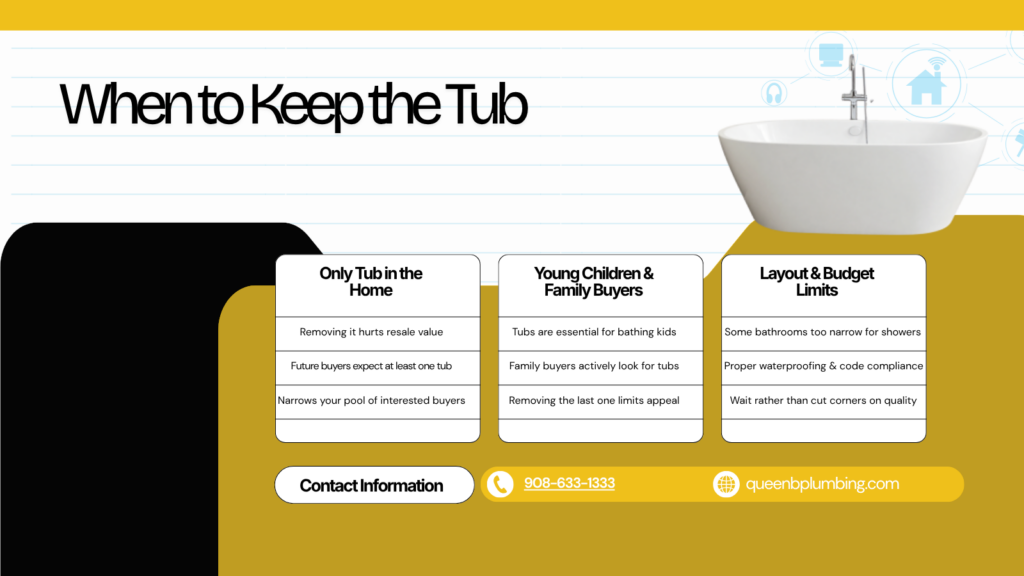
Converting every tub to a shower is not always the right move. There are situations where keeping the tub protects both the home’s value and its everyday usefulness.
It is the only tub in the home. If this bathroom holds the single tub in the house, removing it can be a drawback for families with young children, or for future buyers who specifically want at least one tub.
The home serves young children or family buyers. Tubs are often a practical necessity for bathing small children, and many family-oriented buyers actively look for at least one tub when house hunting. Removing the last one can narrow the pool of interested buyers later on.
The bathroom layout cannot support a comfortable shower. Some bathrooms are simply too narrow or oddly shaped to accommodate a shower that feels spacious rather than cramped. In these cases, the existing tub-shower combo may be the more practical layout.
The budget cannot cover proper waterproofing and code compliance. A tub-to-shower conversion done without adequate waterproofing, correct slope for drainage, or permitted plumbing work can lead to leaks, mold, and costly repairs down the line. New Jersey’s Uniform Construction Code exists specifically to prevent these kinds of shortcuts on regulated plumbing work. If the budget only allows for a surface-level swap, it is often better to wait and do the job right than to convert now and compromise on the details that matter most.
In these situations, holding onto the tub, or waiting until the project can be done properly, is usually the smarter long-term choice.
Tub-to-Shower Conversion Cost in New Jersey
Tub-to-shower conversion costs in New Jersey vary based on materials, plumbing complexity, permit requirements, and the specific municipality where the work takes place. Having a general sense of the price ranges helps homeowners plan realistically before requesting a quote.
Budget tier:
A basic conversion using a prefabricated shower pan, standard fixtures, and a simple shower curtain or basic framed glass door typically falls on the lower end of the cost range. This option keeps costs down while still delivering a functional, code-compliant shower.
Mid-range tier:
This tier often includes a tiled shower base or walls, a semi-frameless glass enclosure, upgraded fixtures, and improved waterproofing details. It represents the most common choice for homeowners who want a noticeable upgrade in appearance and function without moving into premium territory.
Premium tier:
A premium conversion may include custom tile work, a frameless glass enclosure, a curbless or low-threshold entry, built-in niches or seating, and high-end fixtures. This tier is often chosen by homeowners planning to age in place, or those pursuing a full bathroom remodel where the shower is the centerpiece.
Final pricing also depends on factors specific to your home and municipality, including whether existing plumbing lines need to be relocated, the condition of the subfloor once the tub is removed, and local permit fees, which vary by county and township across areas like Bergen, Essex, Morris, Union, Passaic, and Somerset Counties. Homeowners weighing the investment can also review our financing options for home upgrades to help manage the cost.
Getting an accurate quote for a tub-to-shower conversion in New Jersey requires an in-home assessment, since layout, existing plumbing, and material choices all affect the final cost.
Value Beyond Resale
While resale value is often part of the conversation, many homeowners find that the biggest benefits of a tub-to-shower conversion show up in daily life rather than on a future listing sheet.
Daily convenience. Stepping into a shower each morning is simply faster and easier than climbing in and out of a tub, especially for households where every household member showers rather than bathes.
Easier cleaning. Showers, particularly those with tile or acrylic wall systems, are generally quicker to clean and maintain than a tub and surround, with fewer hard-to-reach corners and no basin to scrub.
Better mobility and aging-in-place support. A curbless or low-threshold shower with a built-in bench and grab bars reduces the risk of slips and falls, allowing homeowners to stay safely in their homes as their needs change over time. This kind of accessibility-focused upgrade is one of the most requested additions in our bathroom renovation projects across Somerset County.
A larger visual footprint in smaller bathrooms. Glass enclosures, especially frameless or semi-frameless styles, make a small bathroom feel more open than a bulky tub-shower combo ever could.
A more modern feel. An updated shower brings a bathroom’s look current, which matters even for homeowners who are not planning to sell anytime soon and simply want a space that feels fresh and well cared for.
These everyday advantages are often what homeowners value most, long after the project is finished and the initial cost is behind them.
Permit and Code Considerations in NJ
Tub-to-shower conversions in New Jersey typically fall under regulated construction work, not simple maintenance, which means a construction permit is usually required. Because this project involves plumbing changes, waterproofing, and sometimes structural adjustments, it falls under the New Jersey Uniform Construction Code rather than the kind of minor repair that can be done without oversight. Homeowners can review current code requirements directly through the NJ Department of Community Affairs before starting a project.
Permitted work matters for a few practical reasons:
- Inspections catch problems early. A licensed inspector reviewing waterproofing and plumbing connections can catch issues before walls are closed up, when they are far easier and less expensive to fix.
- Proper documentation protects resale. Unpermitted bathroom work can create complications when it comes time to sell, since buyers and their attorneys often ask for permit records on any plumbing or structural changes.
- Code compliance ensures safety. Requirements around drainage slope, ventilation, and electrical work near wet areas exist to prevent long-term issues like mold, water damage, and unsafe electrical conditions.
Permit requirements and fees vary by municipality, so planning a tub-to-shower conversion in New Jersey should always start with a licensed plumber familiar with local township requirements.
Design Choices That Improve ROI
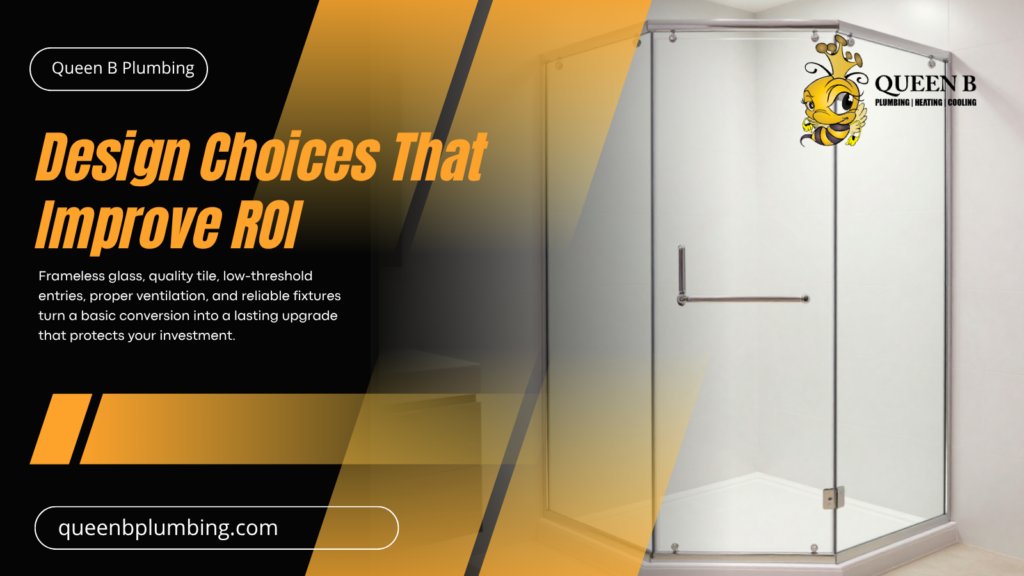
The right design choices can make a tub-to-shower conversion feel intentional and well planned, rather than like a quick fixture swap. These details often make the biggest difference in how the finished space looks and functions.
Frameless or semi-frameless glass. A clean glass enclosure, without heavy metal framing, gives the shower a more open, updated appearance and tends to be a strong visual upgrade for the whole bathroom.
Tile or durable shower wall systems. Quality tile work or a solid surface wall system holds up well over time and adds a polished, custom look compared to basic acrylic panels.
Low-threshold or curbless entry where appropriate. For homes prioritizing accessibility, a low or no-threshold entry improves safety and ease of use, while also giving the shower a sleek, modern silhouette.
Good ventilation. A properly sized and vented exhaust fan protects the new shower from moisture buildup, mold, and long-term damage, which matters even more once a tub’s larger water basin is no longer part of the room.
Quality fixtures and waterproofing. Reliable valves, showerheads, and a properly installed waterproofing system behind the walls are what keep the shower performing well for years, long after the initial installation is complete.
Investing in these details upfront helps the conversion look finished and deliberate, rather than like a budget shortcut, and it protects the investment over the long run.
Is It Worth It for Your Home?
Every home is different, so the right decision comes down to a few key factors: how the bathroom is used, whether another tub exists in the house, and what the household needs from the space over the next several years.
Here is a simple way to think it through:
| Your Situation | Likely the Right Move |
| Tub is rarely used, another tub exists in the home | Conversion is likely worth it |
| Bathroom feels small or dated | Conversion is likely worth it |
| Accessibility or aging-in-place is a priority | Conversion is likely worth it |
| This is the only tub in the home | Consider keeping the tub |
| Young children currently use the tub | Consider keeping the tub |
| Budget cannot cover proper waterproofing and permits | Wait until the budget allows it to be done right |
There is no single answer that fits every home when it comes to a tub-to-shower conversion in New Jersey. The right choice depends on your household’s daily habits, your long-term plans for the property, and whether the bathroom layout can support a comfortable, well-built shower.
If you are weighing this decision for your own home, a straightforward conversation with a licensed plumber can help clarify what makes sense for your space, your budget, and your plans. You can also read what past clients have said about their bathroom projects with Queen B Plumbing.
Frequently Asked Question
How much does a tub-to-shower conversion cost in New Jersey?
Costs vary by tier, from a basic prefabricated setup on the lower end to a premium custom build with high-end finishes. Final pricing depends on materials, plumbing complexity, and your specific municipality.
Do I need a permit for a tub-to-shower conversion in NJ?
In most cases, yes. This type of project typically falls under the New Jersey Uniform Construction Code because it involves plumbing changes and waterproofing, not simple maintenance.
Will removing my tub hurt resale value?
It depends on the rest of the home. If another bathroom has a tub, converting one to a shower rarely hurts value and often helps. If it is the only tub in the house, it is worth thinking carefully before removing it.
Should I keep at least one bathtub in the house?
For households with young children, or homes likely to attract family buyers, keeping at least one tub is generally a safer long-term choice.
How long does a tub-to-shower conversion take?
Timelines vary based on scope, but most conversions take anywhere from a few days to about two weeks, depending on the level of customization and whether plumbing needs to be relocated.


